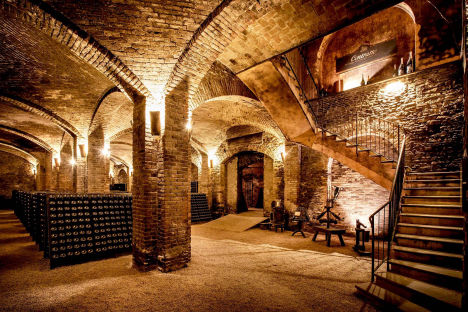
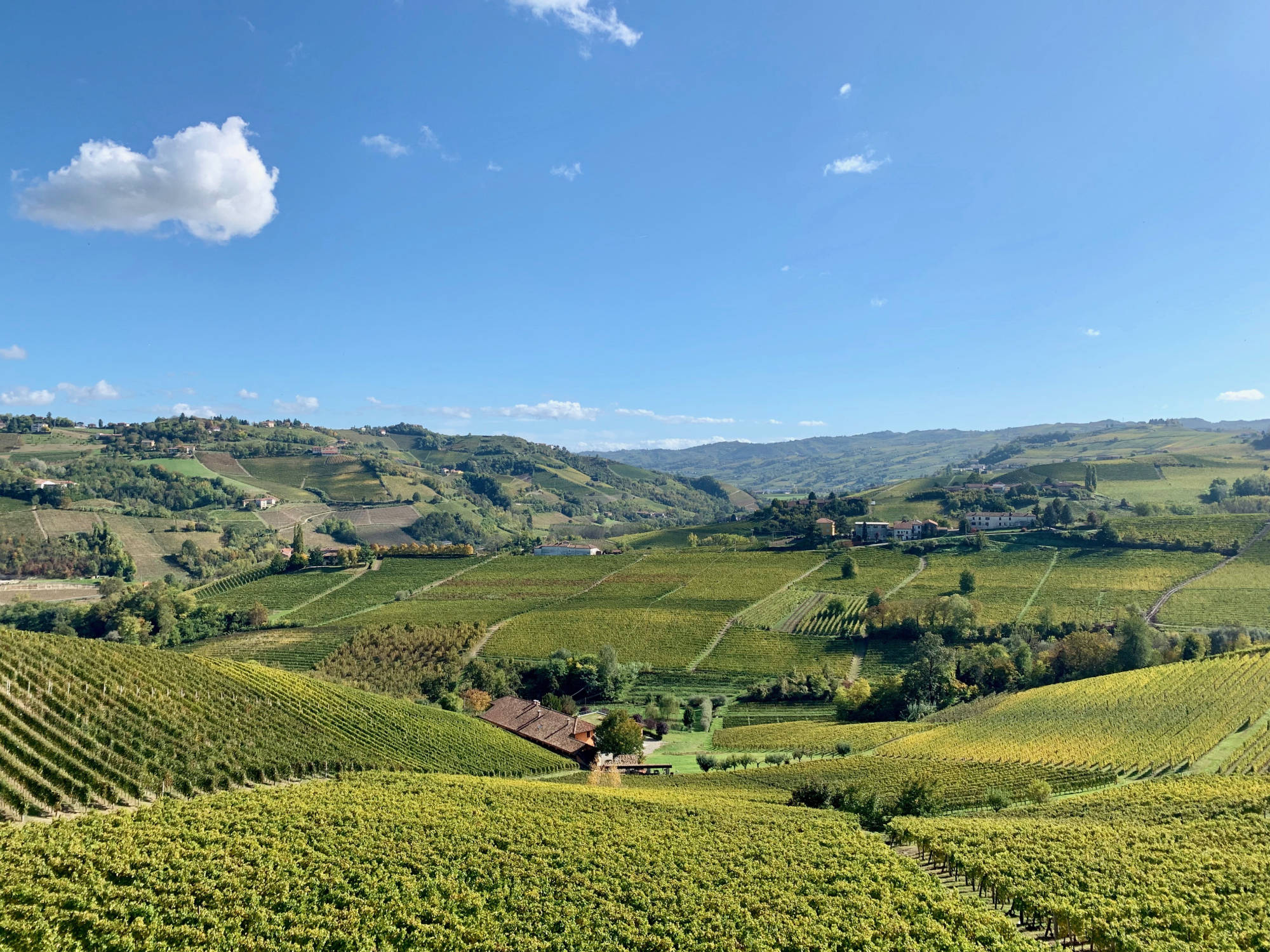
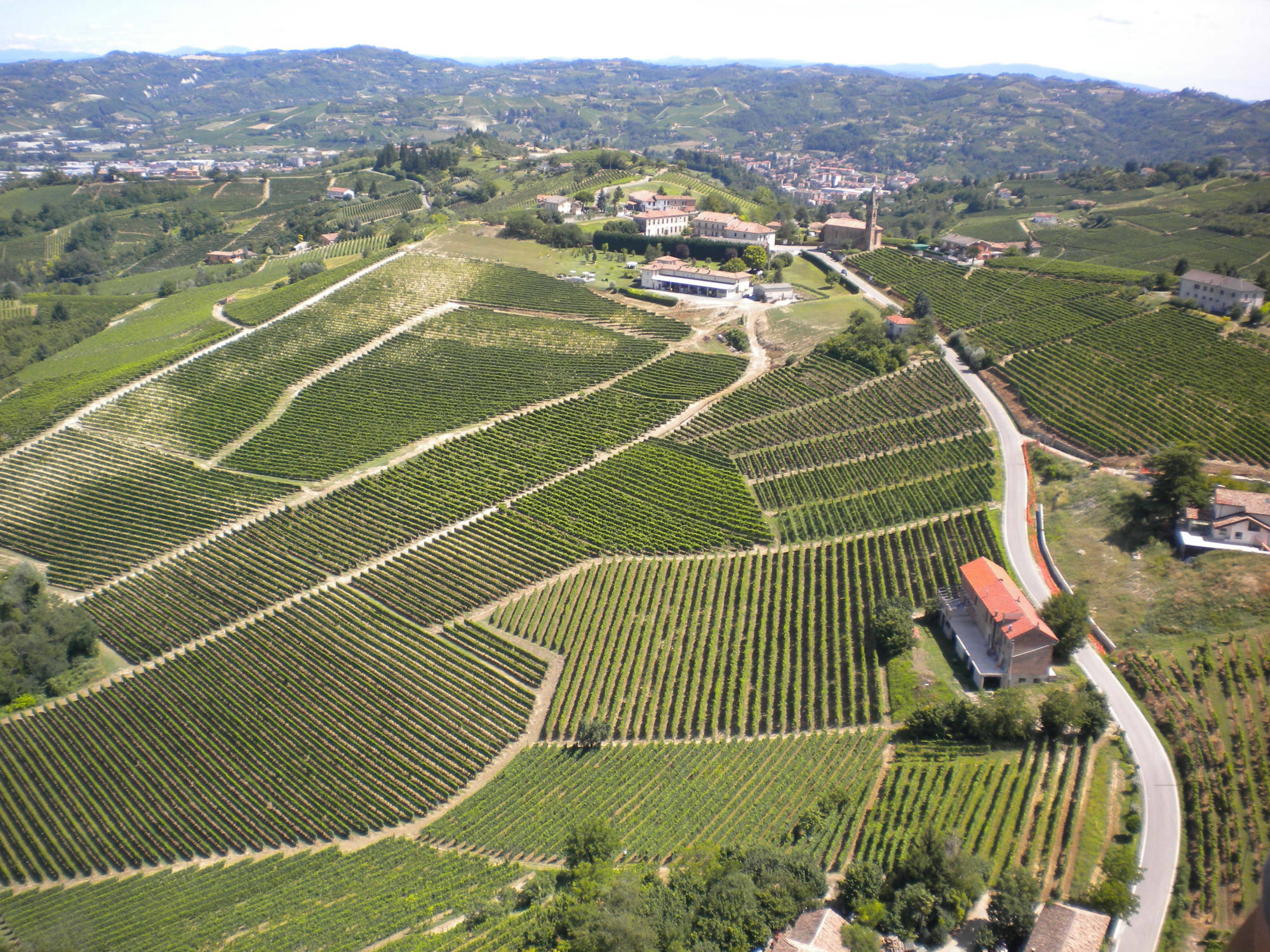
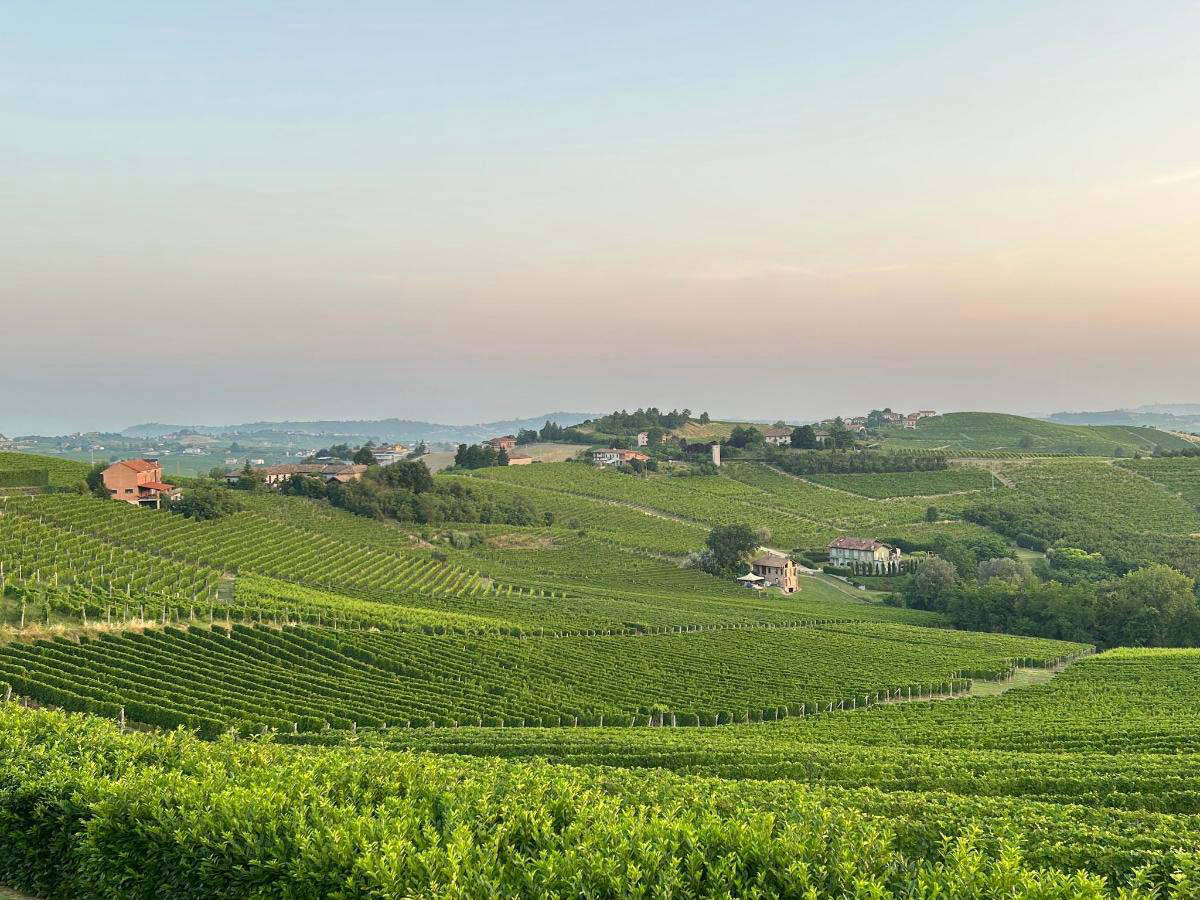
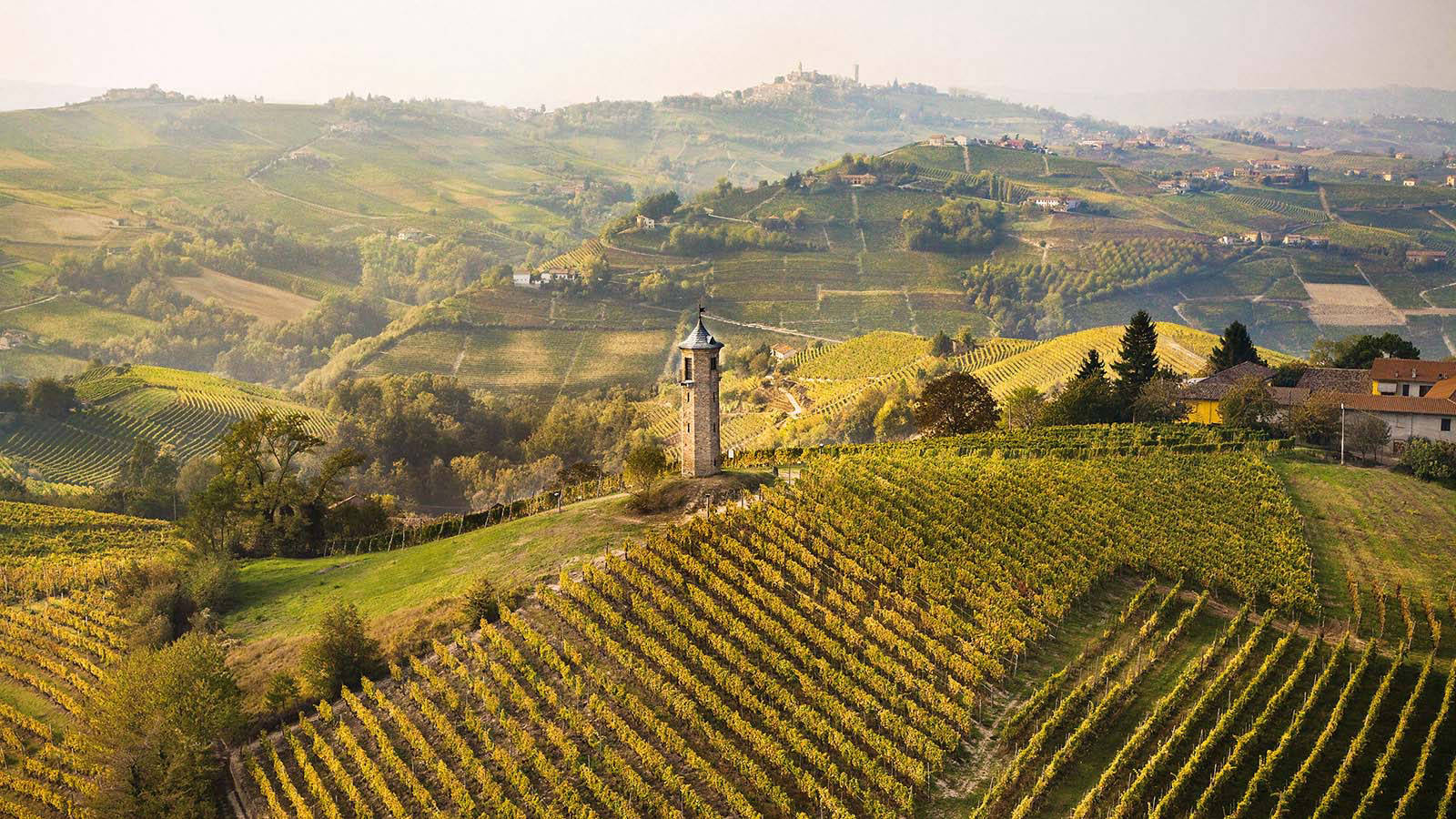
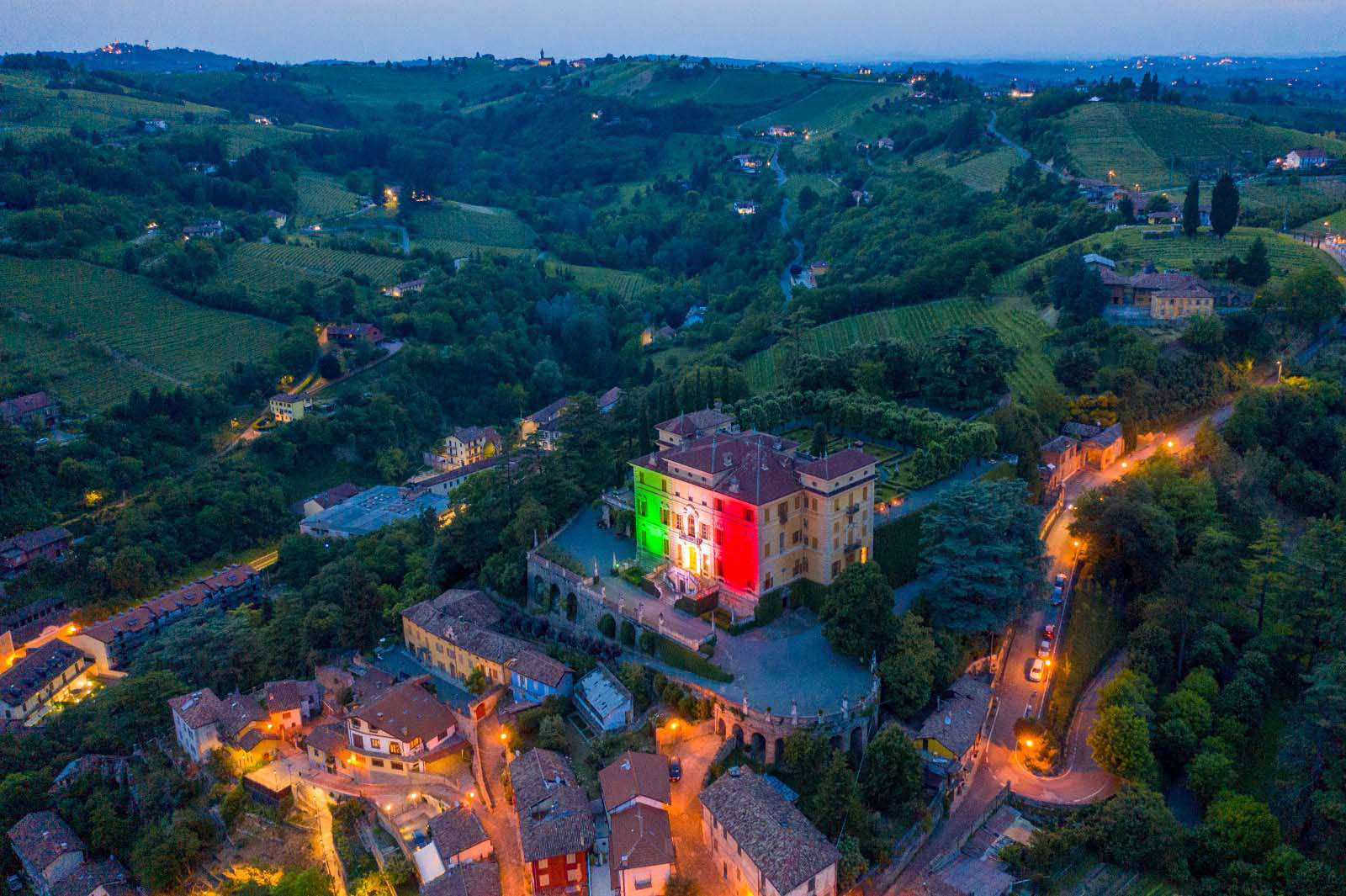
CANELLI - The municipality of Canelli is located in Piedmont, in the southern province of Asti. Among the town's tourist attractions, noteworthy is the Castle, now owned by the Gancia family, which in the mid-17th century replaced the imposing medieval manor destroyed in 1617 during the war against Monferrato. Of great interest are the numerous Baroque churches built between the 17th and 18th centuries by the finest artists of the period. The parish churches of San Tommaso and San Leonardo are noteworthy for the quality of their furnishings, while the confraternities of San Rocco and dell'Annunziata are architectural gems. The splendid historic center, perched on the hillside, is divided into the two districts of Borgo and Villanuova, rich in ancient views and charm. Wonderful panoramic roads branch off from Villanuova, offering breathtaking views of the Astesana Valley to the north and the Langhe to the south. The most distinctive feature that gives Canelli its uniqueness, unique in Italy, is also the least visible: the extensive architectural heritage of Canelli's cellars, true "underground cathedrals." These wind beneath the entire city, descending several levels deep into the tuff hills, creating evocative environments that are true masterpieces of engineering and architecture. In the naves of these "underground cathedrals," at a constant temperature of 12-14 degrees Celsius, entrusted to the loving care of "priests" who know and guard their most hidden secrets, Canelli's most exquisite wines rest and age.
ASTI - The capital and heart of the province, with its 73,000 inhabitants, Asti is a city on a human scale. Known for its wines and cuisine, but perhaps less so, and wrongly, for its artistic beauty, it should be discovered on foot, strolling through its historic center, which preserves its medieval urban layout.
The Middle Ages, a period of great wealth and power, left splendid traces in its main monuments—the cathedral, the collegiate church of San Secondo, the complex of San Pietro in Consavia—as well as in the towers and details of its buildings and streets. The Baroque style of its noble palaces and the 19th-century elegance of its squares blend seamlessly, creating a harmonious ensemble with the elegant Art Nouveau shopfronts.
Asti is tied to its sumptuous past, which is revived each year in its Palio. The commercial liveliness of its weekly markets and the rich program of cultural and food and wine events make a visit even more enjoyable.
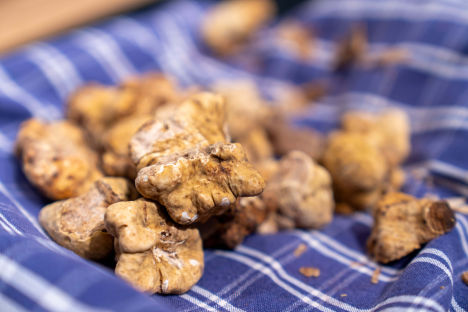
ALBA – CAPITAL OF THE LANGHE - Over the years, its name has been linked to its most renowned products: wine and truffles. It is a city rich in history, architectural inspiration, and cultural references. A tour of the city can begin in Piazza Medford, taking Via Cavour. Turning right onto Piazza Elvio Pertinace, we find the Church of San Giovanni, which houses a panel painting of the Madonna delle Grazie by Barnaba da Modena. In the choir is an icon by Giovanni Antonio Molineri depicting the baptism of Jesus. Returning to Via Cavour, which features one of the most evocative architectural features in the entire historic center, we reach Piazza Duomo, also known as Piazza Risorgimento. Dominating the square are the Cathedral of San Lorenzo and the Town Hall, which houses the Crowned Virgin by Macrino d'Alba, the Piccolo Concerto by Mattia Preti, and a work by Pinot Gallizio. From Piazza del Duomo, the Sineo, Bonino, and Astesiano Towers, the tallest and best preserved, are visible. A short distance from the Cathedral stands the Church of San Domenico, which restoration by the Albeisa family has brought back to its former splendor. Beyond San Domenico, continue along Via Calissano, where the Teatro Sociale stands next to the Liceo Govone. From Piazza del Duomo, you can walk along Via Vittorio Emanuele, the hub of social, cultural, and economic life, toward Piazza Savona, another key focal point of city life. To appreciate this small capital of industry and food and wine, you absolutely must understand its past. Then, stroll slowly through the city center streets, as the people of Alba do, enjoying its art, its aromas, its delicious food shops, wine shops, and boutiques. Alba is a town in flux, having undergone a remarkable economic transformation in recent years, undoubtedly thanks to the skill and tenacity of its inhabitants and the richness of the territory. Yet it does not deny, but rather celebrates, its difficult past, as narrated by Beppe Fenoglio in his stories: the gray life in the countryside, the Resistance, the meaning of the human condition. In those pages, the Langhe become epic places, settings of eternal human tragicomedy. Alba is a kaleidoscope of a thousand styles, alternating medieval and early twentieth-century houses, Baroque churches, and, almost like watchtowers, the towers commissioned by wealthy families during the Middle Ages. Lowered in size, but still a symbol of the city.
ACQUI TERME - In the heart of the Bormida Valley, among the hills of the upper Monferrato, lies a tropical paradise: Acqui Terme. The town's symbol is a marble fountain called "La Bollente," from which water reaches a temperature of 75 degrees Celsius (167 degrees Fahrenheit). Legend has it that newborn babies were brought to the spring and immersed for a few seconds; those who survived were called "sgaientò" (scalded), a historical nickname for the inhabitants of Acqui. Known and frequented since the 2nd century, the ancient center of Acqui Terme is still a hub for those seeking spa treatments. The thermal waters of the ancient Terme lake and the Fontanino dell'Acqua Marcia fountain are an excellent therapy for those suffering from rheumatism, arthritis, and gout.
TURIN - An ageless city, Turin is much more than the sum of its monuments: an urban cosmos teeming with ingenuity and culture, it owes much of its charm to its enchanting geographical location at the foot of the western Alps, watched over by snow-capped peaks.
Italy's first capital, it offers unparalleled views of its downtown streets and long arcaded avenues, balancing the restrained pomp of Piedmontese Baroque with rational Roman urban planning. It seduces visitors by welcoming them into the noble and solemn spaces of Piazza Castello, the city's historic heart, while in its historic cafés and restaurants, it reveals itself as the queen of taste and conviviality. It's impossible not to be tempted by the city's vibrant rituals, especially the aperitivo and the ritual of hot chocolate, a legacy of that noble charm best expressed by the Royal Residences, declared a UNESCO World Heritage Site in 1997.